


Do I Need To Get A Low Wattage Kettle And Toaster For My Caravan Or Motorhome
Do You Need a
Low-Wattage Kettle and Toaster
for a Caravan or Motorhome?
Yes - in most caravans and motorhomes, you’ll need a low-wattage kettle and toaster to avoid tripping the electric hook-up. Standard household appliances are designed to heat quickly by drawing a lot of power, which can easily overload caravan electrics, particularly on 10 amp pitches.
If you’re new to caravan or motorhome ownership, it’s one of the most common surprises. You plug in a normal kettle or toaster, switch it on, and suddenly the power cuts out. In this guide, we’ll explain why that happens and how low-wattage appliances help you avoid it.

Why Normal Kettles And Toasters Trip Caravan Electrics
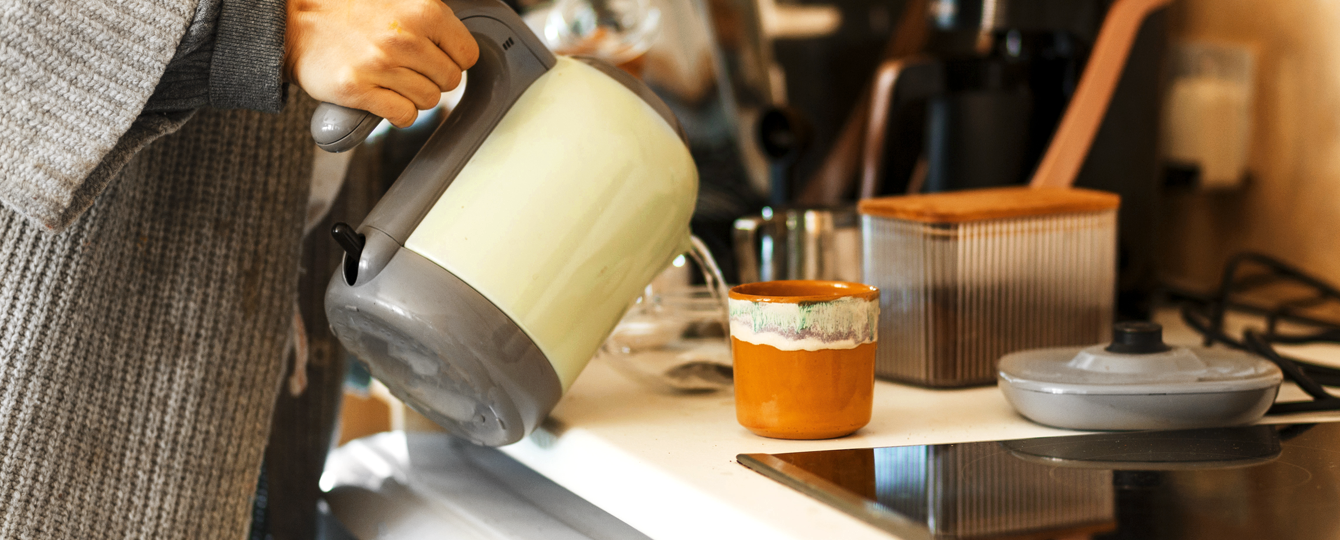
Most household kettles and toasters are designed for use in a kitchen with a large, stable power supply. To heat up quickly, they draw a high amount of power the moment you switch them on.
A typical domestic kettle uses between 2200 and 3000 watts, while a standard toaster often uses around 1200 watts. In a house, that isn’t an issue. In a caravan or motorhome, however, the available power is far more limited.
When a high-wattage appliance tries to draw more power than the electric hook-up can supply, the system protects itself by tripping the power. This is why kettles are usually the culprit — they demand a large surge of electricity all at once.
This can happen even more easily if other appliances, such as a heater or battery charger, are running at the same time.

How Caravan And Motorhome Electric Hook-Ups Work
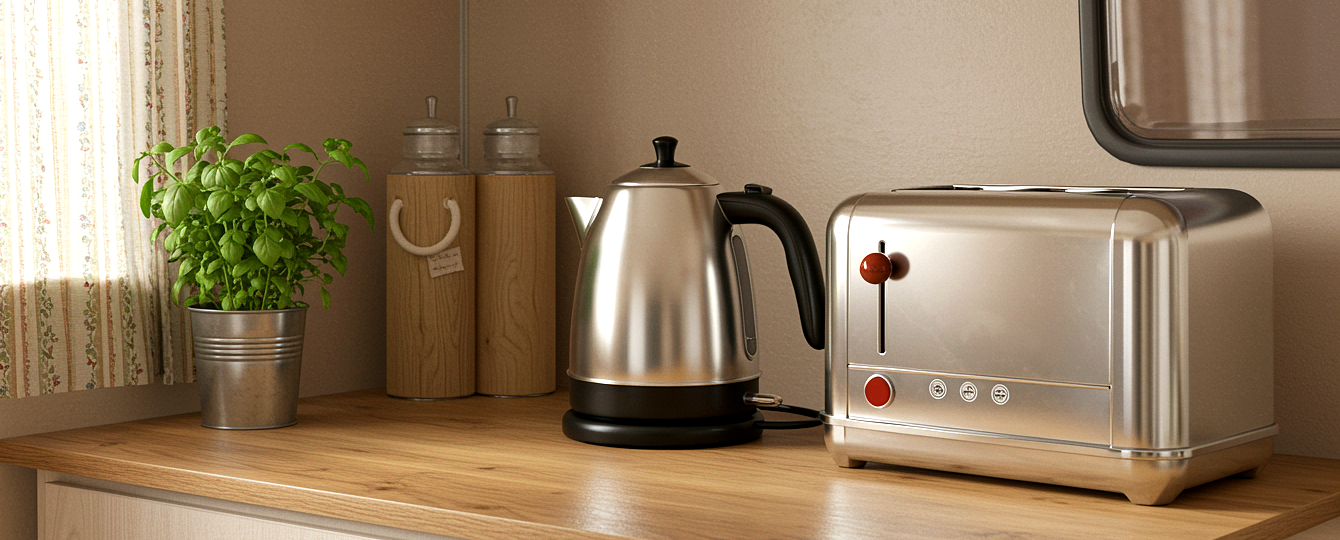
Most caravan and motorhome sites in the UK provide an electric hook-up rated at either 10 amps or 16 amps. While some fully serviced pitches offer higher capacity, these two ratings are by far the most common.
In simple terms, the amp rating limits how much power you can draw at any one time. UK appliances run on 230 volts, so you can estimate how much current an appliance uses with a straightforward calculation:
Watts ÷ 230 Volts = Amps
?For example, a 3000W household kettle draws around 13 amps on its own. On a 10A pitch, that’s more than the supply can handle. Even on a 16A pitch, it leaves very little capacity for anything else to be running at the same time.
This is why using standard household appliances in a caravan or motorhome often leads to nuisance power trips, even when everything seems fine at first.
What Counts as a “Low Wattage” Kettle for Caravans and Motorhomes?
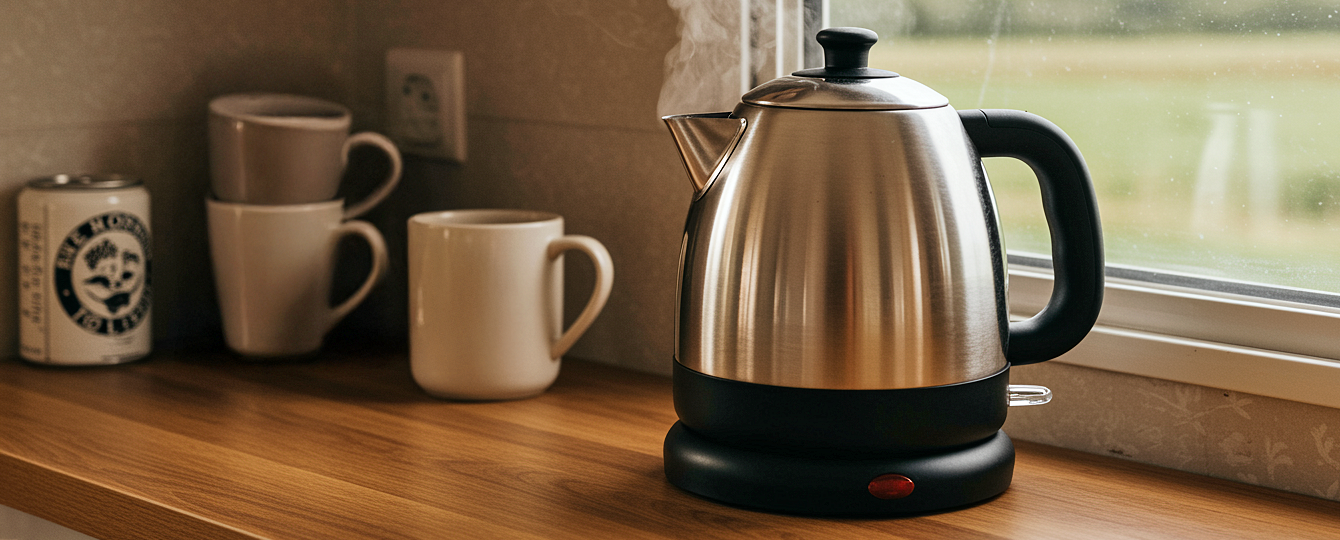
In caravan and motorhome terms, a low-wattage kettle is simply one that draws less power than a standard household model, making it less likely to overload the electric hook-up.
Most low-wattage kettles designed for caravans fall within the 1000 to 1600 watt range, although some setups can safely use models up to around 2000 watts if the pitch and other appliances allow.
The trade-off is that lower-wattage kettles take slightly longer to boil. As a rough guide, boiling one litre of water takes around 6–7 minutes with a 1000W kettle and just over 3 minutes with a 2000W kettle. For most people, the extra wait is a small price to pay for not constantly tripping the power.
Importantly, these kettles are designed with limited power supplies in mind, which makes them far better suited to life on a campsite than standard household models.
What About Low-Wattage Toasters?
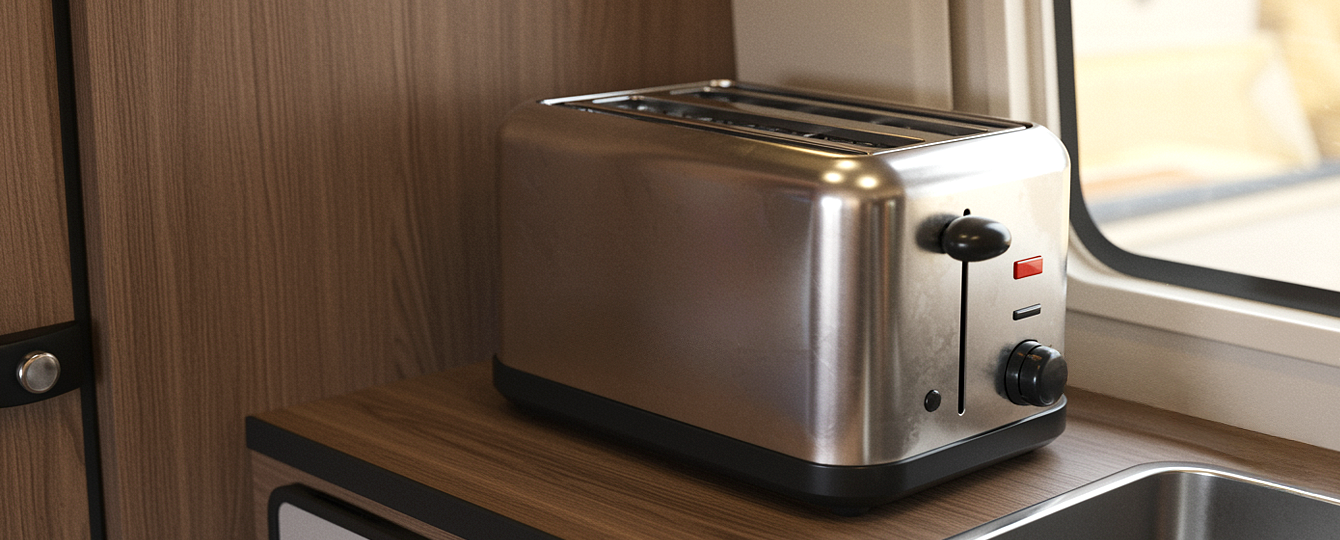
Low-wattage toasters follow the same principle as caravan kettles: they reduce the strain on your electric hook-up by using less power than standard household models.
Most toasters suitable for caravans and motorhomes start at around 700 watts and typically go up to 1000 watts. While they may take a little longer to toast bread than a domestic toaster, the difference is rarely dramatic in everyday use.
More importantly, a lower wattage toaster significantly reduces the risk of overloading your power supply, especially when other appliances, such as a battery charger or water heater, are running at the same time.
For many caravan owners, switching to a low-wattage toaster is one of the easiest ways to make their electric setup more reliable.
How To Work Out What Wattage You Can Safely Use

To avoid power trips in your caravan or motorhome, it’s important to think about total power usage, not just the wattage of a single appliance.
Every electrical device you run at the same time draws power from the same limited supply. If the combined load exceeds the pitch rating, the hook-up will trip.
For example, you might have the following appliances running:
?Water heater: 1350W
Battery charger: 300W
Lighting: 50W
Toaster: 800W
?Together, that adds up to 2500 watts, which is just over 10 amps at 230V. On a 16A pitch, that leaves some capacity available for a kettle. On a 10A pitch, however, you’re already at the limit.
This is why kettles often cause the power to trip; they’re usually switched on last, pushing the total load over what the hook-up can handle.
Common Mistakes New Caravan and Motorhome Owners Make
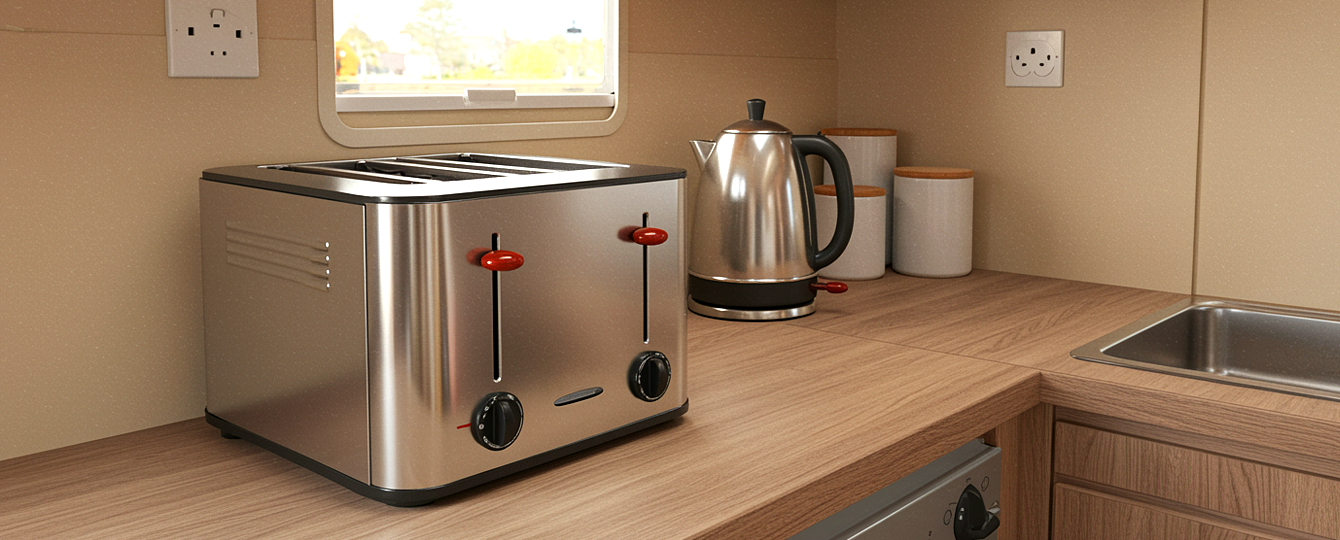
Many power issues in caravans and motorhomes aren’t caused by faulty electrics, but by simple misunderstandings, especially for first-time owners.
Some of the most common mistakes include:
-
Using a household kettle or toaster, assuming the hook-up can handle it
-
Running multiple high-wattage appliances at once, such as a kettle and electric heater
-
Assuming all “travel” appliances are low wattage, when some still draw close to domestic levels
-
Not checking the pitch amp rating before plugging in high-draw devices
Avoiding these mistakes usually comes down to understanding your power limits and choosing appliances designed specifically for caravan and motorhome use.
So…Do You Really Need Low Wattage Appliances?
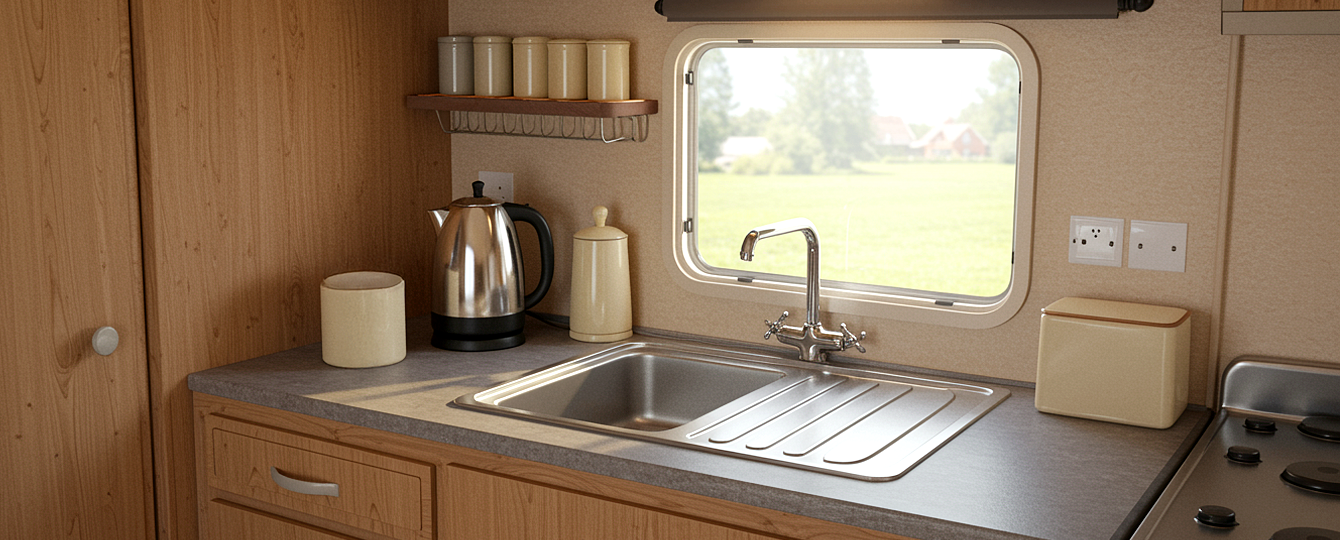
For most caravans and motorhomes, the answer is yes. Low wattage kettles and toasters are far better suited to the limited power available on campsites, particularly on 10 amp and 16 amp pitches.
While standard household appliances may work in some situations, they leave very little margin for error and make power trips far more likely. Low wattage alternatives reduce the strain on your electric hook-up, make power management easier, and help ensure everyday tasks, like making a cup of tea or breakfast, don’t become a frustration.
Once you understand how your caravan or motorhome uses power, choosing the right appliances becomes much simpler.
If you’re ready to choose appliances designed for caravan and motorhome electrics, these guides will help you find suitable options:
Best kettles for motorhomes, caravans and campervans
?
Best toasters for camping, caravans and motorhomes
?Both guides focus on low wattage models that are suitable for typical campsite electric hook-ups.
Frequently Asked Questions


Brownhills Accessory Shop
Newsletter